Wine Tourism in Greece: From Experience to Knowledge
The evolution of wine tourism in Greece forms a field where landscape, gastronomy and cultural memory operate as a unified learning environment.
My academic background at the School of Physical Education and Sport Science of Athens highlighted the value of structured experience and the pedagogical dimension of recreation. The fields of Recreation Management and Sports Marketing offered methodological tools that today support the design of high-quality wine tourism activities. The underlying philosophy remains stable. People learn through participation, observation and spatial awareness. Wine, as a cultural asset, provides an ideal framework for this experiential process.

🔶 Wine tourism as a form of cultural education
Wine tourism operates as a bridge between the visitor, the land and the people who cultivate and create wine. Greece offers a rich viticultural landscape, indigenous varieties with depth and rural communities with strong gastronomic identity. Growth requires engagement from the domestic traveler. Knowledge leads to meaningful support and support leads to local development. Experiential learning creates a relationship of trust between the visitor and the product.

🔶 The Lantzoi model, a unified framework with three thematic experiences
In the village of Lantzoi in Elis we developed a coherent trilogy of experiences at Abelon Ktima Brintziki. It is a unified wine tourism model expressed through three distinct thematic approaches: a pure wine tourism activity, a dog-centered experience and a wellness retreat. The dog-centered experience became the first Dog Workshop in Greece implemented inside an active winery, within its vineyards and across its pet friendly guesthouses. Seven guesthouses hosted fifteen dogs in total, creating a pioneering example of integrating companion animals into Greek tourism.

This model included a network of activities that strengthened the visitor’s connection with the region: traditional must pudding preparation, wine tasting from organic vineyards, local cuisine and culinary practices, participation in vineyard tasks, a coastal walk at Kaiafas beach, a visit to Ancient Olympia and a forest hike in the Foloi Oak Forest. Each experience acted as a field of experiential learning, allowing participants to understand the destination as a complete system of production, taste, history and culture. Lantzoi emerged as an example of a living rural ecosystem shaped through meaningful experiences.

🔶 Collaboration with Greek wineries and systematic observation
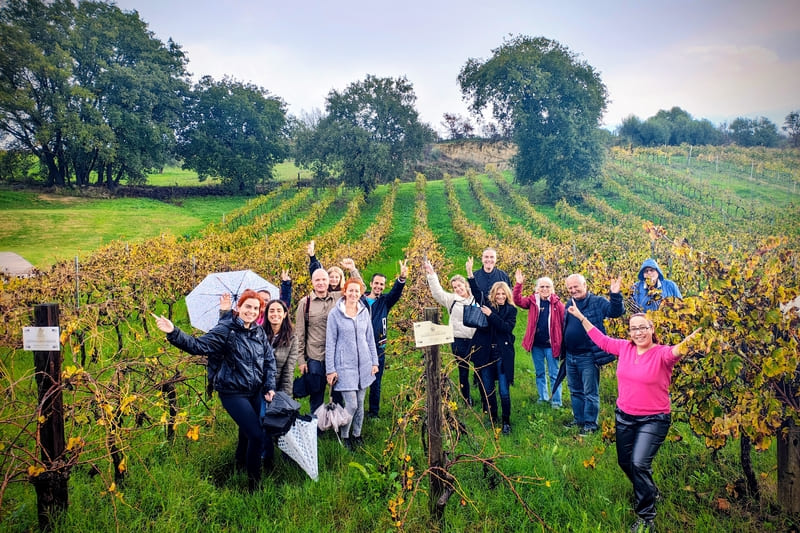
Wanderlust has carried out visits and hiking-based wine tastings across multiple viticultural regions of Greece, in collaboration with selected wineries in Nemea, Mantineia, Pieria, Attica, Evia and other areas. Each visit contributes to an ongoing research process. We observe the reception of visitors, the narrative structure of the producer, the design of the tasting experience and the integration of local cuisine. The collected observations form a knowledge base for designing high-quality experiences.

🔶 Georgia, cultivating thought through travel
During a journey to Georgia I visited areas near archaeological sites that reveal the earliest evidence of wine production in the world. I observed a culture where taste, family and production coexist as a unified system. Along the old national road, small local houses baked bread and sold cheese, practices that strengthen the bond between people and place. This example shaped my reflection on Greece. The development of a wine culture begins with the relationship that residents build with their own products.

🔶 Interactivity and Aroma Challenge
The evolution of Wanderlust includes an emphasis on interactivity. As a Sommelier student I incorporate professional olfactory training tools such as Le Nez du Vin. Through short Aroma Challenges participants explore aromas and connect them with their origin and sensory profile. Tasting becomes an active learning process. Travel experiences gain the character of a participatory workshop that enhances sensory awareness and deepens the visitor’s understanding of wine.

🔶 Conclusion, a vision for Greek wine tourism
Wine tourism has the potential to become a central pillar of sustainable rural development. Experiential participation cultivates emotional connection, strengthens local economies and offers a field for cultural education. Wanderlust serves this vision through structured experiences grounded in knowledge, research and contemporary pedagogical approaches. Greece possesses all the elements to evolve into an international example of wine tourism. The foundation lies in people, in place and in the experience that unites them.
Tasos Konstantinidis
CEO & Outdoor Project Manager, Wanderlust Outdoor Activities & Travel
Graduate of the School of Physical Education and Sport Science, University of Athens – Sport Management & Recreation Program Design
Sommelier Student, Genius in Gastronomy