Hiking Poles: The Complete Guide to Benefits, Types and Proper Use
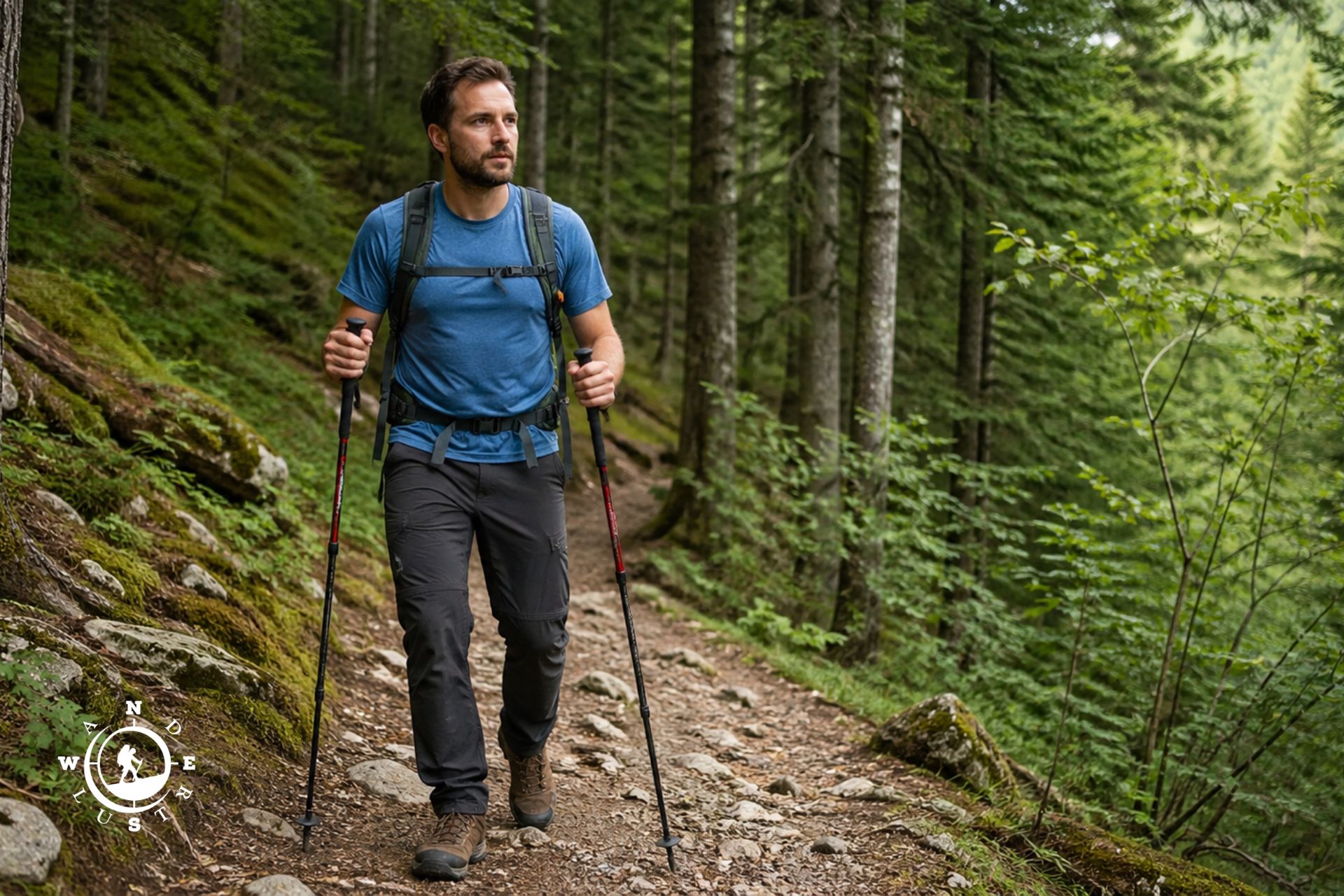
Hiking poles have evolved into one of the most valuable companions for every hiker, whether it is a relaxed walk through the forest or a demanding mountain ascent. Although many people still consider them optional equipment, in practice they can provide significant advantages in comfort, stability, safety, and overall performance.
For many experienced hikers, trekking poles are not simply an accessory. They are a practical tool that helps the body move more efficiently, more correctly, and with less physical strain.
🔶 What Are Hiking Poles and Why They Matter
Hiking poles, also known as trekking poles, are specially designed support tools used to improve balance, support, and stability during hiking activities. They create two additional points of contact with the ground, which becomes especially useful on uneven terrain or during long-distance hikes.
They are particularly useful for:
- steep uphill sections with elevation gain
- long downhill descents
- rocky or loose terrain
- mud, snow, or wet rocks
- hiking with a backpack
- long-duration treks
🔶 The Main Benefits of Hiking Poles
Better Balance and Stability
On trails with rocks, roots, or slippery sections, hiking poles help hikers maintain better body control and move with greater confidence.
Reduced Pressure on the Knees
Especially during descents, the knees absorb significantly higher loads. Trekking poles can help reduce part of this pressure by distributing effort to the upper body.
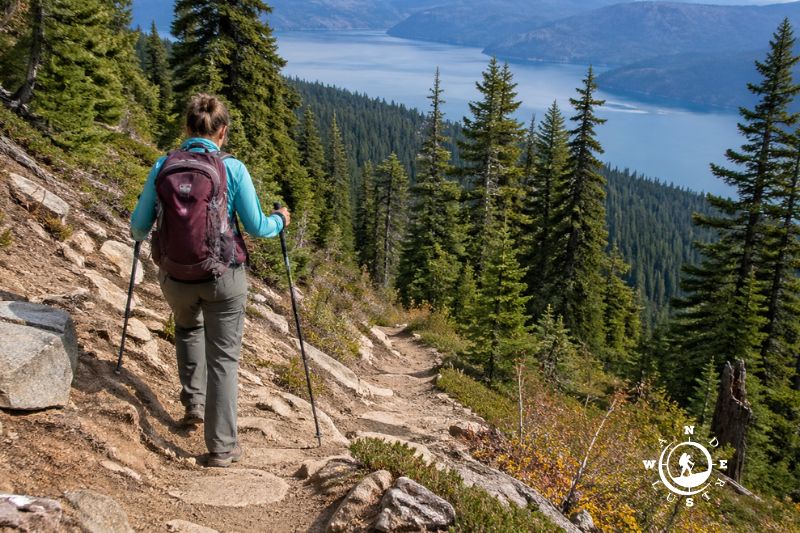
Support During Uphill Hiking
During long ascents, trekking poles engage the core and upper body more effectively, helping distribute effort more efficiently.
Improved Walking Rhythm
Using trekking poles helps many hikers maintain a more consistent pace during long-distance hikes.
🔶 What Scientific Studies Show
International studies have examined the use of trekking poles during uphill and downhill hiking. The main findings indicate that trekking poles:
- can reduce stress on the lower limbs during descents
- increase upper-body involvement during movement
- improve stability on technical terrain
- contribute to a stronger sense of control and safety
They are not a magical solution, but when used correctly, trekking poles offer a real and practical advantage on the trail.
🔶 Types of Hiking Poles
The market offers several options. The ideal choice depends on the type of activity and frequency of use.
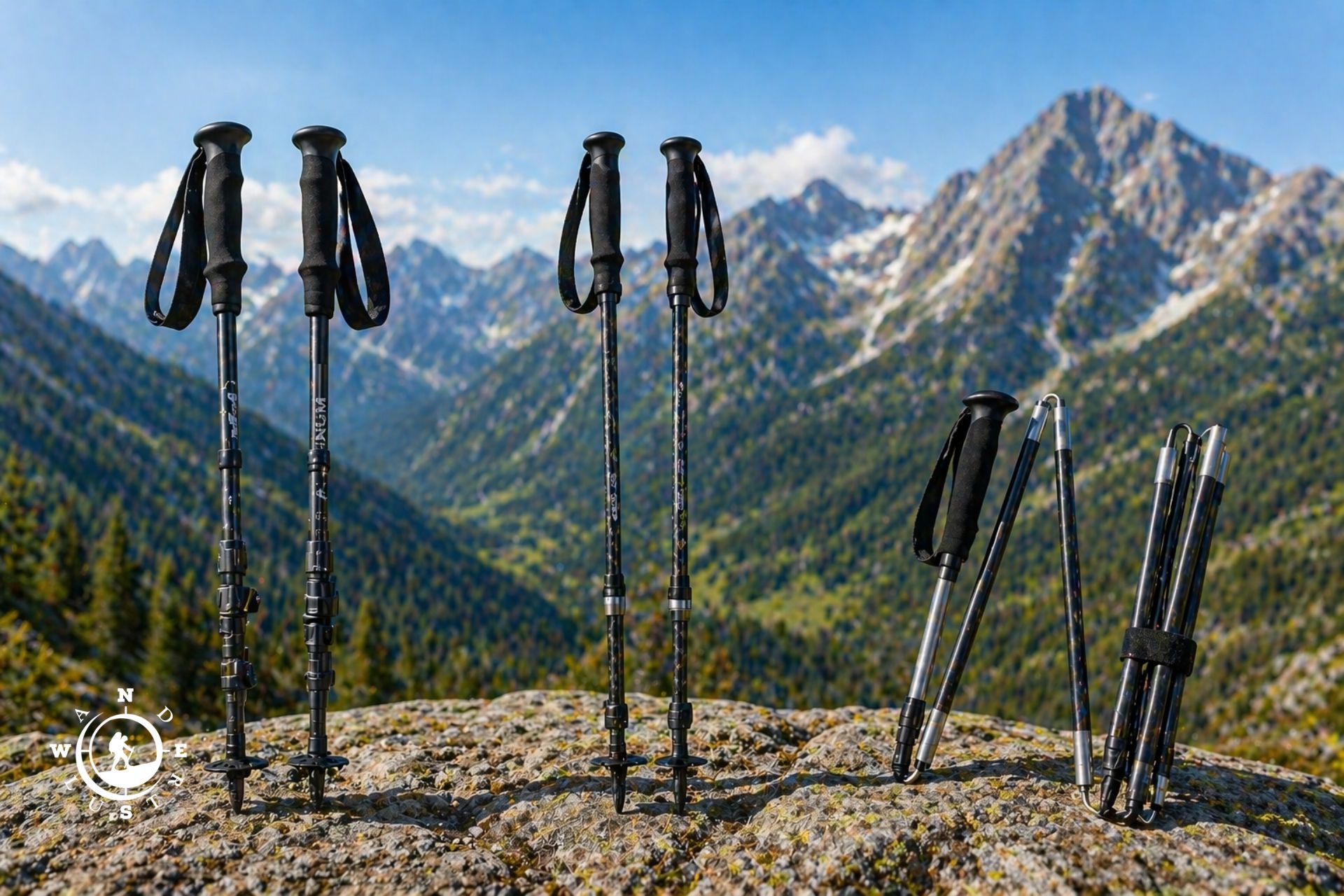
Telescopic Hiking Poles
The most common type. They are adjustable in length and easily adapt to different slopes and user heights.
Folding Hiking Poles
These collapse into a compact size and are easy to store in a backpack. Extremely popular among trail runners and fast hikers.
Fixed-Length Hiking Poles
Lightweight and structurally simple. Commonly used for faster-paced or performance-oriented hiking.
Anti-Shock Hiking Poles
These include shock-absorption systems and may provide additional comfort during long descents.
🔶 Materials Used in Hiking Poles
Aluminum
- more affordable option
- very durable and resistant
- ideal for general hiking use
Carbon Fiber
- lighter weight
- excellent feel and responsiveness
- ideal for long distances and fast-paced movement
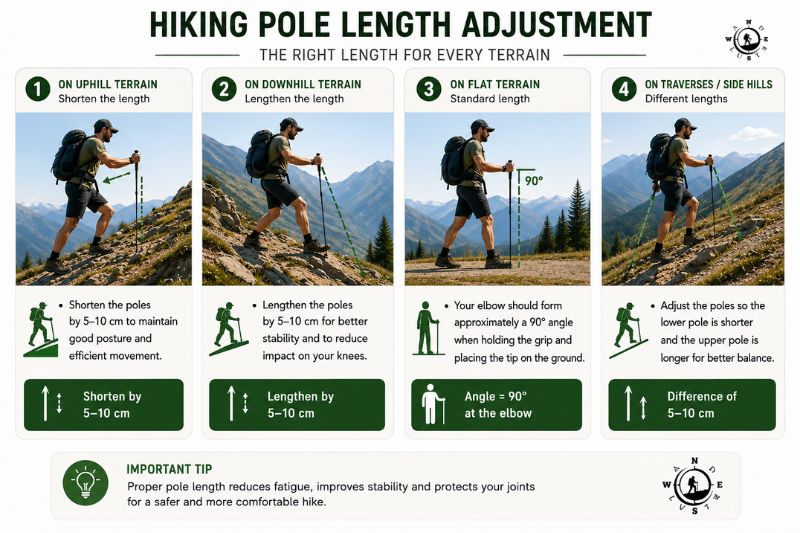
🔶 Adjusting Hiking Pole Length on Sloped Terrain
Proper pole length adjustment becomes important whenever the terrain changes.
- On flat terrain, the elbow should form approximately a 90-degree angle.
- When hiking uphill, slightly shorten the poles.
- When descending, slightly increase the pole length.
- On side slopes or traverses, adjust the uphill and downhill pole accordingly.
🔶 Proper Use of Hiking Poles
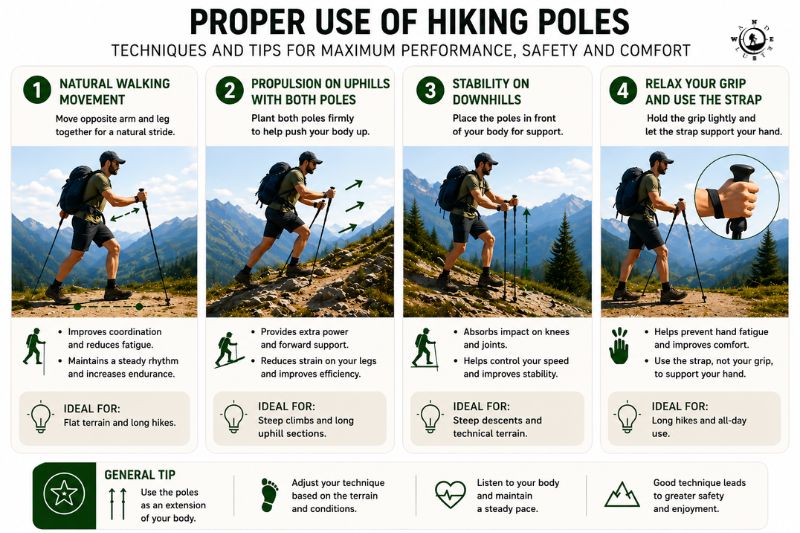
Correct technique makes trekking poles more effective and less tiring to use.
- Alternate the opposite arm and leg naturally while walking.
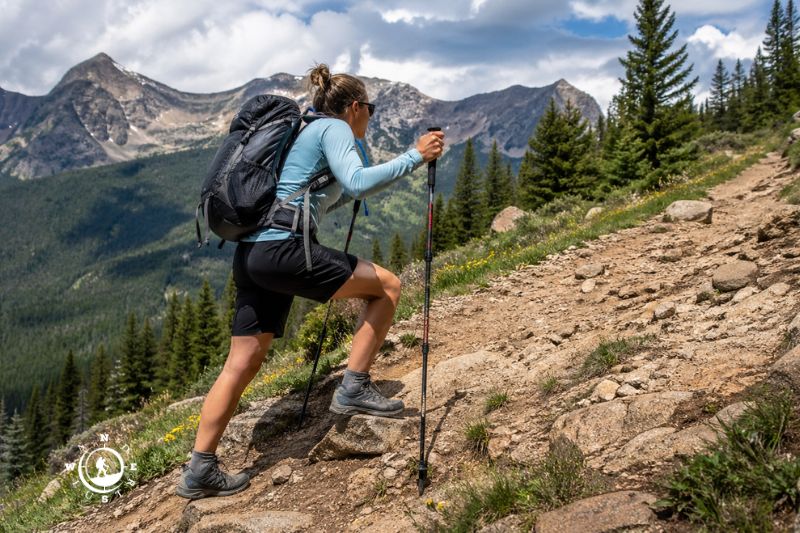
- During uphill sections, place the poles slightly forward for propulsion.
- During descents, poles improve control and stability.
- Grip the handles firmly but avoid excessive tension.
🔶 10+1 Uses of Hiking Poles You May Not Know
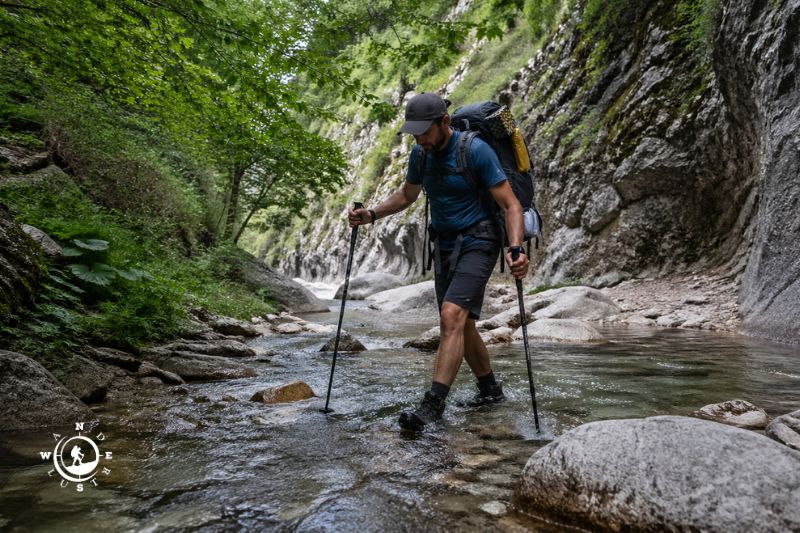
- crossing streams more safely
- checking the depth of mud or snow
- providing stability on loose terrain
- reducing strain while carrying a backpack
- supporting a tarp or shelter during camping
- moving branches away from the trail
- maintaining a better walking rhythm
- providing support during long hikes
- testing footing on unstable terrain
- boosting confidence for beginner hikers
- additional support on technical descents
🔶 How to Choose the Right Hiking Poles
Before purchasing, consider:
- how often you hike
- whether you mainly hike in the mountains or on easier trails
- whether low weight or maximum durability is your priority
- whether you need compact portability
- your available budget
For most hikers, a quality telescopic model covers nearly every need.
🔶 When Hiking Poles Help the Most
- significant elevation gain
- long downhill descents
- technical terrain
- long-duration hikes
- carrying a heavy backpack
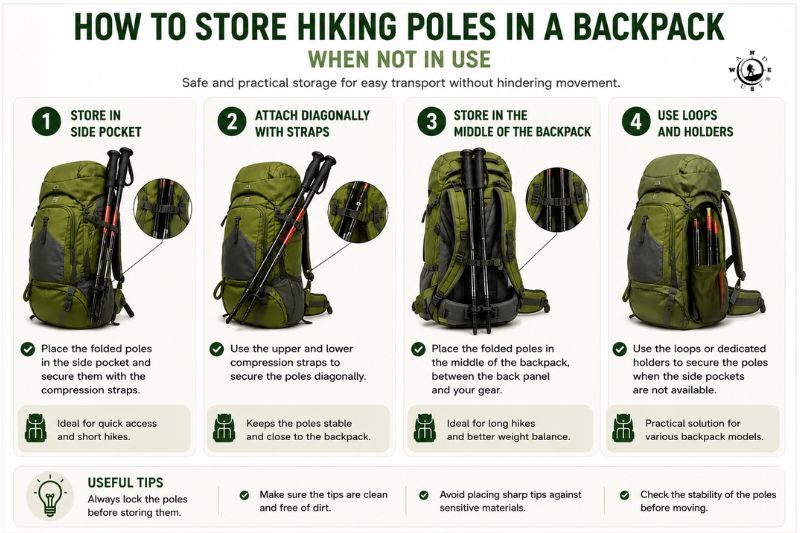
🔶 How to Store Hiking Poles on Your Backpack
When not in use, trekking poles should be properly secured to your backpack.
- Fully collapse all sections.
- Secure them using the backpack’s dedicated straps.
- Keep the tips pointing downward whenever possible.
- Avoid leaving poles hanging loosely.
🔶 Hiking Pole Care and Maintenance
- Clean them after exposure to mud, rain, or snow.
- Allow them to dry completely before storage.
- Check locking mechanisms regularly.
- Inspect tips and rubber caps for wear.
- Store them in a dry place.
🔶 Common Mistakes When Using Hiking Poles
- incorrect pole height adjustment
- gripping too tightly
- improper use of wrist straps
- applying excessive pressure on the poles
- using poles without proper movement rhythm
🔶 Conclusion
Hiking poles are a genuinely worthwhile investment for anyone who regularly hikes on trails and mountain routes. They improve balance, increase safety, distribute physical effort more efficiently, and enhance overall comfort during hiking activities.
🔶 Scientific References & Sources
- American Hiking Society – Hiking Resources
- REI Expert Advice – How to Choose Trekking Poles
- PubMed – Knee Joint Forces During Downhill Walking with Hiking Poles
- PubMed – Effects of Hiking Downhill Using Trekking Poles
- NCBI / PMC – Review on the Biomechanics and Physiology of Pole Walking
✍️ Article by George Koumpakis